






Investment casting

Contents |
[edit] What is investment casting?
Investment casting is also known as the ‘lost wax’ process and is one of the oldest known metal casting methods where molten metal is poured into a mould. Investment casting dates back 5,000 years and can be traced back to Ancient Egypt and China, where patterns were formed out of beeswax to create jewellery or other ornaments. Today, high-technology waxes, refractory materials and a large range of alloys are used.
[edit] What is the investment casting process?
There are several steps involved in the investment casting process:
- First, a pattern or replica of the part that will be cast is created by injecting wax into a die. The pattern is created as one piece.
- Then, several wax patterns are compiled into an assembly known as a gating system or ‘tree’, which allows molten metal to flow into the mould cavity later.
- The assembly is submerged in high-grade ceramic slurry (the investment stage).
- An additional coating of course ceramic particles up to 10mm thick are built-up while the assembly is still wet.
- The wax is melted from the dry mould and leaves a thin-walled, hollow ceramic shell.
- Moulds are fired to remove any remaining wax and add durability to the final mould, a step which can use temperatures of up to 1,000 degrees C.
- Molten metal is poured within the still-heated moulds. These are heated to allow for better dimensional accuracy and tolerances as low as 0.76mm.
- The cooled shell mould is broken or cut open to reveal the casting.
- The final part is finished using processes such as fettling, grinding, sandblasting, heat treatments and others.
[edit] The benefits of investment casting
This process offers benefits including:
- It allows for the manufacturing of intricate and complex forms.
- It ensures parts have smooth surfaces with no parting lines.
- A vast range of alloys can be used, including carbon steel, stainless steel and those of aluminium and bronze. Materials that are difficult to machine can be used in this process too.
- It offers good dimensional accuracy to components.
- Clients can choose both low- and high-volume manufacturing.
- The cost of production is reduced, since both assembly and waste are minimal.
- It is possible to add names, logos or other information to the parts.
- Parts have a high level of accuracy, repeatability and integrity.
[edit] When to use investment casting?
This process is popular worldwide when it comes to manufacturing parts with high accuracy, repeatability and cast integrity. It is used in a variety of industries and sectors, from oil and gas to automotive, aerospace and defence.
The investment casting process can be used when:
- Clients require a medium- to high-volume of orders – virtually no tool wear, so it is ideal for consistency and repeatability. The process also saves time and labour costs, since it eliminates the need for secondary machining.
- High precision parts are required – investment casting allows for a great degree of precision, as well as great dimensional accuracy, complex shapes and the addition of details.
- Clients need different sizes – the process allows for the creation of parts that meet the demanding standards of a multitude of industries. These standards include size: investment casting produces parts that can weigh a few grams up to several kilos.
- There is a need for a variety of materials – with investment casting, parts can be cast in both ferrous and non-ferrous metals, as well as an array of alloys.
- Parts need to have smooth surface finishes – investment casting is a process that allows for the manufacturing of components with finer quality finishes, as it can achieve near net shapes with little to no machining.
--Dean Group 09:57, 16 Oct 2019 (BST)
[edit] Related articles on Designing Buildings Wiki
Featured articles
Check out some of the best features and news from Designing Buildings as well as key stories from around the web.
Connecting knowledge, technology and conservation
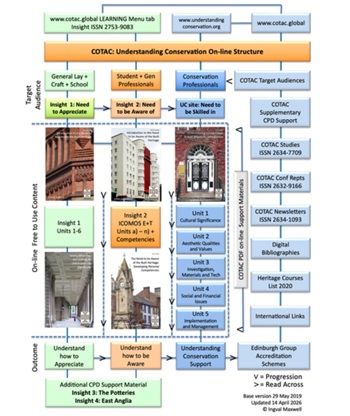
Building competence for the future of built heritage.
Building Regulations and Building Safety Act
CIOB publishes free advice for non-domestic clients.
Building Safety Newsletter from MHCLG.
An extraordinary record of steel engineering worldwide.

Households living near new pylons to save on bills.

ECA warns growth must not outpace grid capacity or skills.
The role of the client and decision making

CIOB response to built environment professions call for evidence.
Construction's sustainability reporting revolution
Tracking upfront embodied carbon with digital tools.
ECA welcomes procurement reforms

Public spending must back British jobs and skills.
Campaigning for Edinburgh: the Cockburn Association 1875-2049

The role of the civic voice in protecting character. Book review.

CIOB photography competition is open for entries.
ECA Edmundson apprentice of the year award
Finalists announced.